Csergezán, Pál (1924 - 1996)
BiographyARTWORKS FOR SALE
Biography
Pál Csergezán (Záhony, – , according to the contemporary obituary) was a Hungarian painter, graphic artist and book illustrator. His work brings together close observation of nature, animal movement and narrative drawing. He is particularly known for his horses, wildlife subjects and illustrations for books by István Fekete. [1][3][5]
His Hungarian name order is Csergezán Pál; the unaccented form Pal Csergezan is also used. These forms refer to the same Hungarian artist who lived from 1924 to 1996. The Bibliothèque nationale de France authority record provides a further reference for identification. [2]
Conflicting biographical data: the Pilisi Parkerdő centenary commemoration uses 28 June as his birthday. The BnF gives , with death on in Budapest. Róbert Muray’s 1996 obituary states that he died on 30 September. A local historical account names Anna-lak; civil records would be needed to resolve the precise place of death and the differing dates. [1][2][3][9]
Born in Záhony, Csergezán spent much of his childhood in Kisvárda. At fifteen he moved to Budapest and attended an applied arts course with an architectural emphasis for about three years. Towards the end of the war he was sent to the front and became a Soviet prisoner of war. Biographical accounts associated with Sumy describe his encounter with Russian nature painting during captivity. He returned to Hungary in 1948. [4][5][9]
He studied graphic art at the Magyar Képzőművészeti Főiskola, the Hungarian College of Fine Arts, graduating in 1953. His teachers were Sándor Ék, Jenő Barcsay and György Kádár. Several biographies date the start of his studies to 1950, whereas Muray’s contemporary recollection records admission in 1948. The same obituary mentions his marriage and two sons. [3][4]
Early in his career he illustrated textbooks, popular science publications and books for young readers. He worked for Nők Lapja, Ország-Világ and Magyar Vadász, later becoming a prominent illustrator and art director of Nimród. His book drawings, magazine illustrations, filmstrips and illustrated stories reached a wide readership. [3][5]
Notable illustrated publications include Kálmán Kittenberger’s A Kilimandzsárótól Nagymarosig (1956), István Bársony’s Erdőn, mezőn (1962), and illustrated editions of István Fekete’s Vuk (1965) and Hú (1966). Móra’s 2022 edition of Lutra also credits his drawings. A book’s first publication date does not necessarily date the edition illustrated by Csergezán. [5][7]
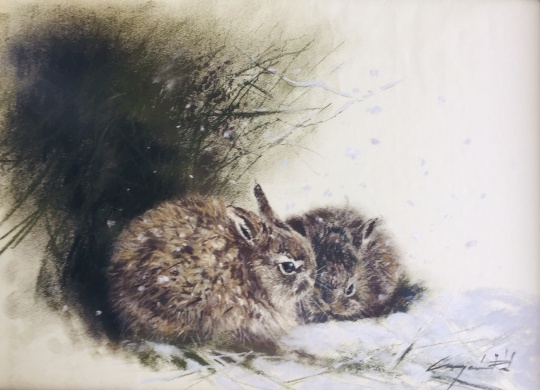
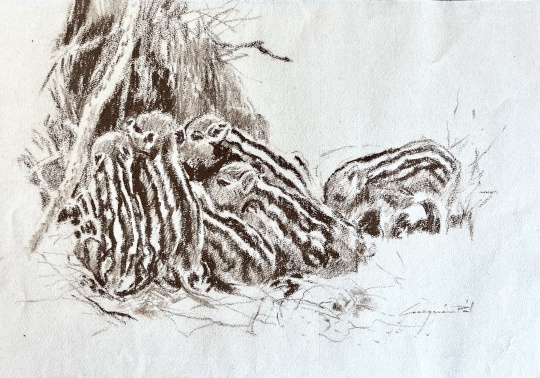
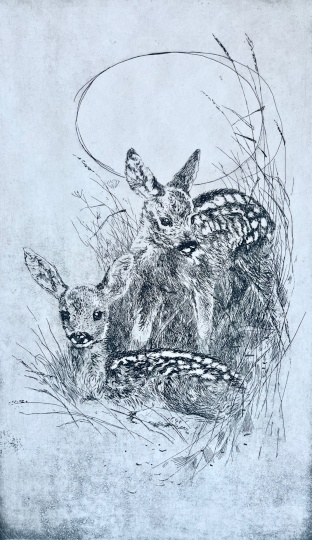
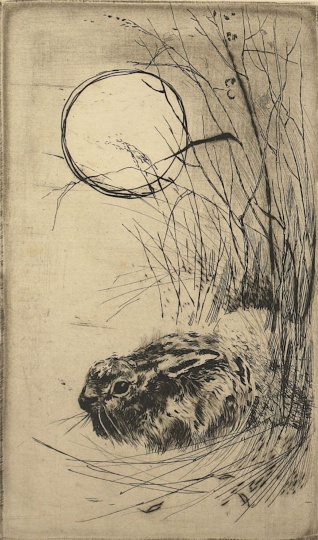
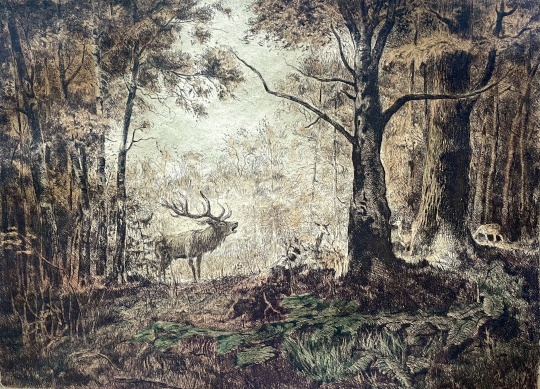
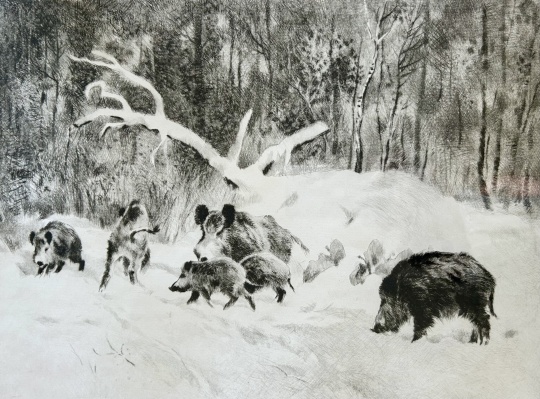
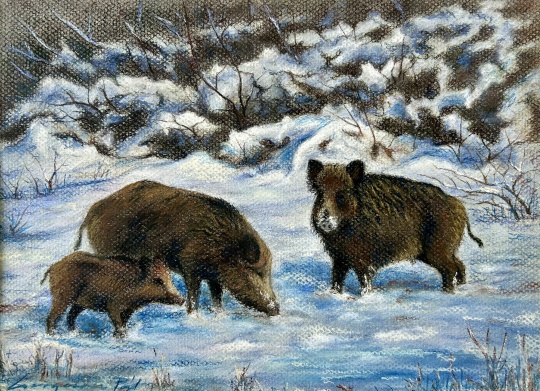
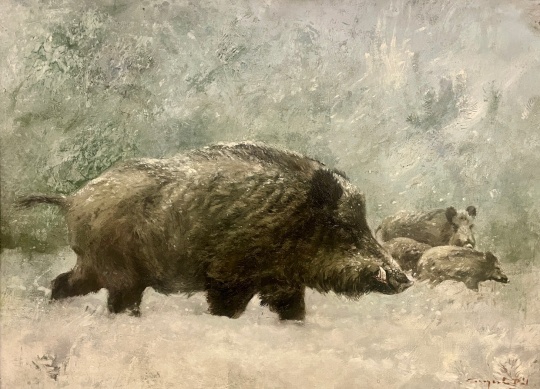
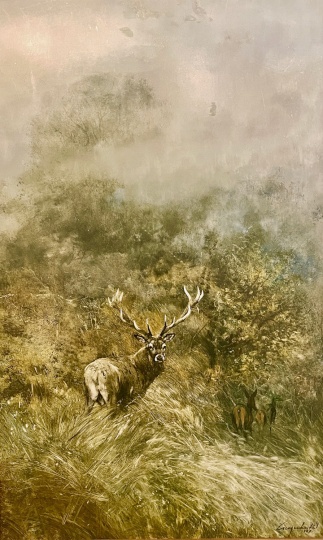
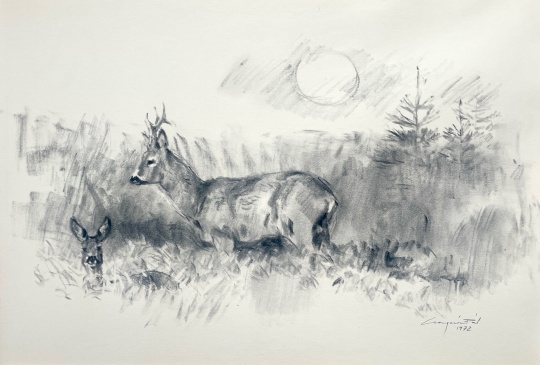
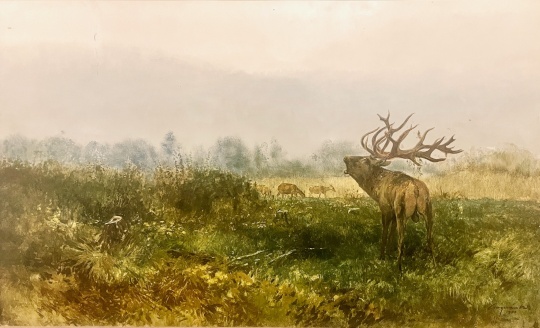
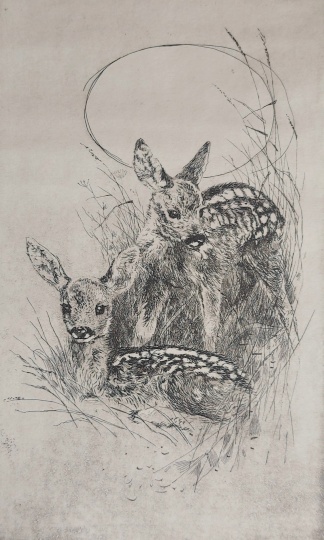
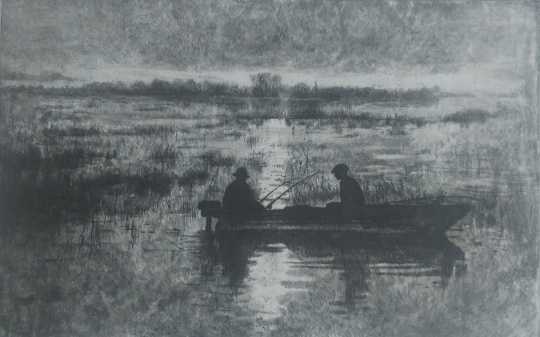
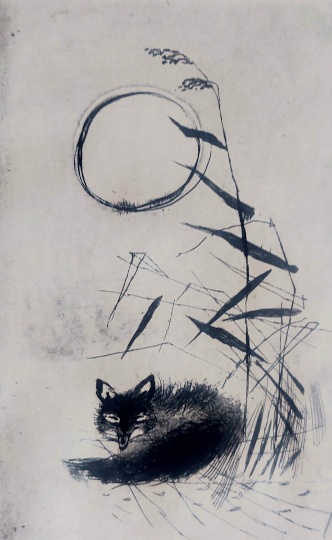
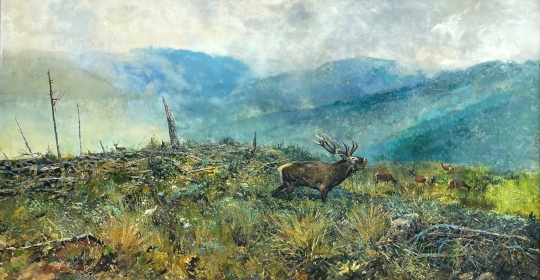
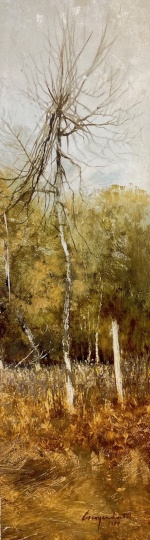
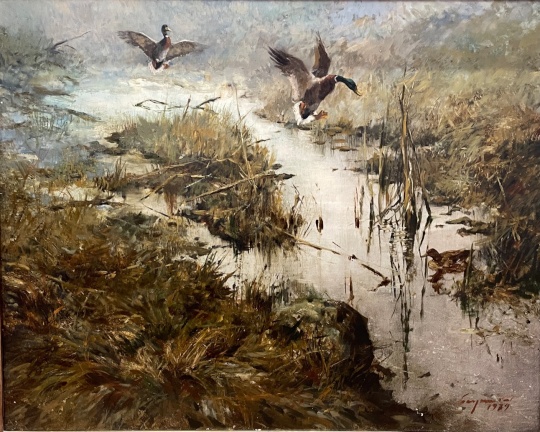
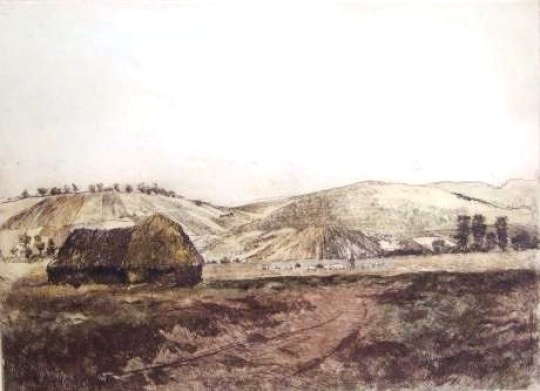
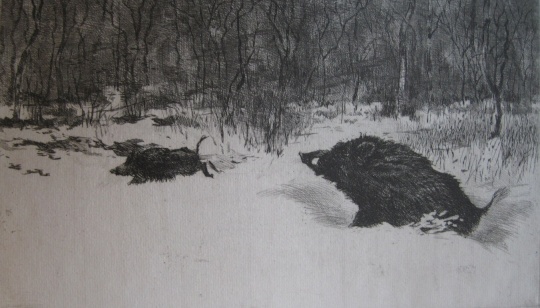
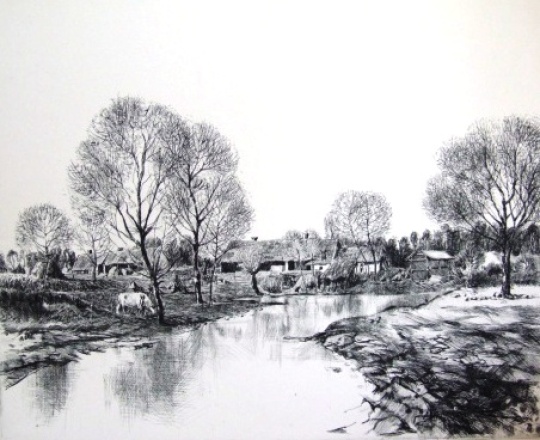
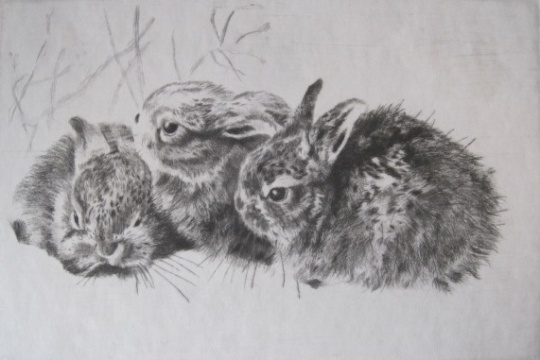
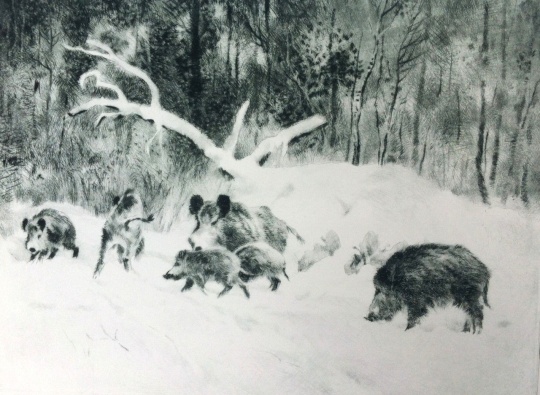
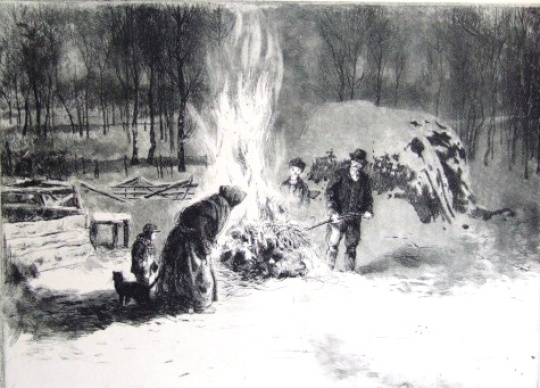
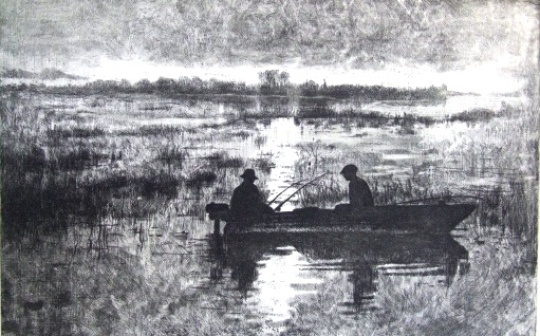
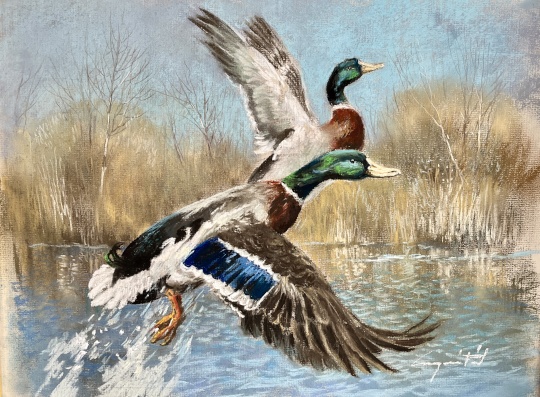
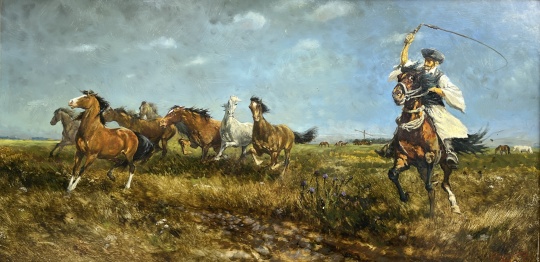
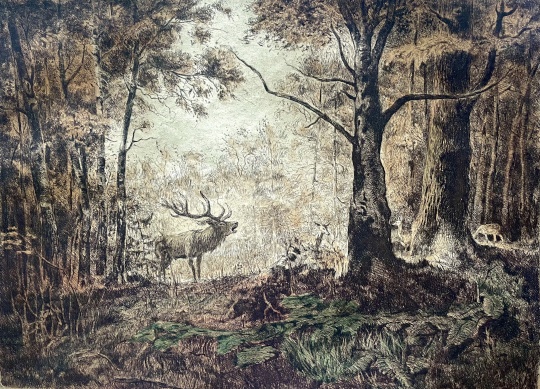
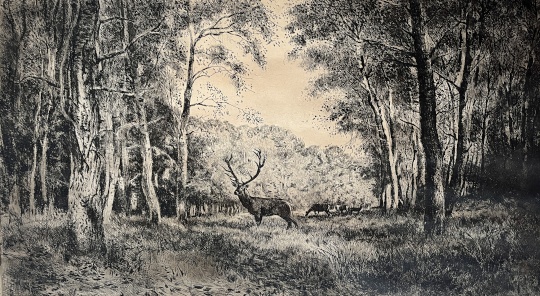
Horses, deer, wild boar, foxes and birds recur throughout his drawings and paintings. Animals are usually shown within their habitats: woodland, snow, mist, watersides and changing light shape the scene. Alongside horse studies, he depicted fishermen, rural life and landscapes. Anatomical accuracy and convincing movement are central to his observational, realist approach to nature. [4][5]
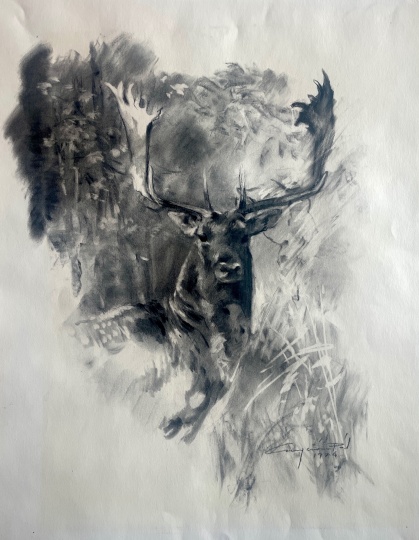
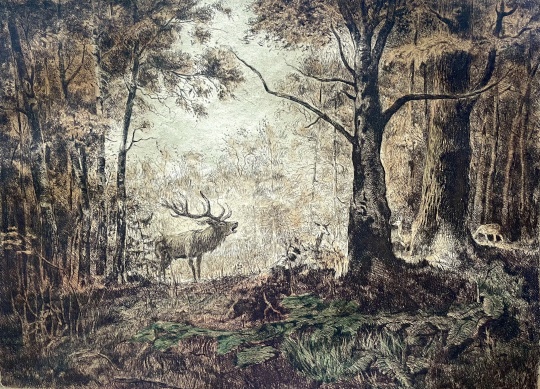
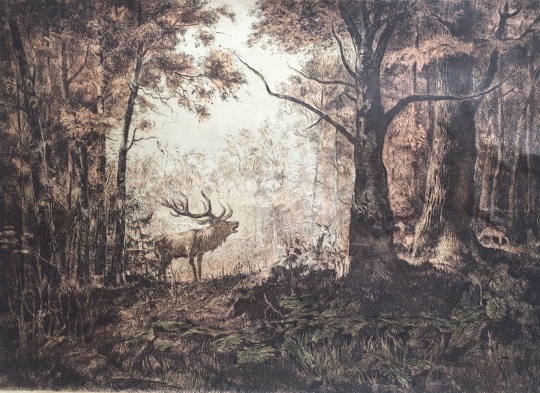
His practice encompassed oil painting, drawing, etching, watercolour and gouache. Firm, expressive lines distinguish his graphic work, while atmosphere and colour play a larger role in his paintings. Muray names László Paál, Pál Szinyei Merse and Gyula Benczúr as Hungarian models. The term “hunting painter” describes his subject matter; later biographical accounts state that he did not hunt himself. [3][5][9]
Csergezán lived and worked in Germany for a period. In 1971 he travelled to Iran at the invitation of Prince Abdorreza Pahlavi, brother of Shah Mohammad Reza Pahlavi, studying and depicting horses, wildlife and landscape. László Studinka’s recollections, published in Nimród in 1978, document the personal invitation. The often-used description “court painter” does not establish a formal appointment. [5]
In Hungary, Gemenc, Gyulaj and the forests between Budakeszi and Telki provided opportunities for observation and work. From 1985 he belonged to the cultural commission of the International Council for Game and Wildlife Conservation (CIC). He became the first president of the Altamira Egyesület, founded in 1994. [3][4][5]
Telki and its surrounding forests were central to his final years. According to the local historical account, Anna-lak was his place of death; this woodland location between Budakeszi and Telki conflicts with Budapest in the BnF record. His ashes were placed near the Anna-lak hunting lodge. His memory is preserved by the Csergezán Pál Alapítvány, established in 1997, an artistic distinction bearing his name and the lookout tower on Nagy-Kopasz. [2][3][4][9]
New editions of his illustrated books and later memorial exhibitions have renewed attention to his graphic work. Material from László Vaski’s private collection was shown in Sopron and Keszthely before becoming a permanent display at the Festetics Imre Élményközpont in Gyenesdiás in 2026. This documents exhibition placement, rather than public ownership or transfer of the entire estate. A Telki municipal report also records graphic works donated in 2019 to the Kodolányi János Közösségi Ház és Könyvtár, the local community centre and library. A complete, verified inventory of works in public collections is unavailable. [7][8][10]
His works circulate in Hungary and internationally. Assessment depends on technique, execution, condition, signature, documented provenance and exhibition history. It is particularly important to distinguish an autograph drawing, an original print and a reproduction. Print annotations such as E.A., próba (proof) and színpróba (colour proof) do not by themselves establish a particular value or future appreciation.
Róbert Muray’s contemporary obituary in Magyar Vadászlap, November 1996, page 6, is a key account of his career. A later overview is the trilingual CSERGEZÁN memorial album published in 2018. Centenary biographies should be read alongside the bibliographical details of specific illustrated editions; the sources do not agree on every point. [3][5][7][8]
Checked: 7 October 2026.
Pál Csergezán – life and art
Childhood, education and family
Graphic art, illustration and editorial work
Subjects, techniques and artistic approach
Travel and artistic connections
Awards and distinctions
Year
Distinction
Source and qualification
1982
German hunting art distinction
Later biographies describe a grand prize; the contemporary obituary names a cultural award. Its relationship to an award also attributed to Monte-Carlo remains unresolved; two separate prizes are not established. [3][11]
1993
Pro Natura commemorative plaque
The official recipients list identifies a commemorative plaque, a category distinct from the Pro Natura prize. [6]
1995
Hubertus Cross, gold grade
The year is recorded in the contemporary obituary. [3]
1996 (secondary evidence)
Pro Cultura Venationis commemorative plaque
The year is given in the secondary biographical summary; the Telki account lists the distinction without a date. [4][12]
Not established
Munka Érdemrend (Order of Labour); Nimród Medal
Named in the contemporary obituary without award dates. [3]
Later years, remembrance and collections
Place in the art market
Literature and research
Sources
Exhibitions
A selection, not a complete exhibition history. Original titles are retained; where no specific exhibition title is known, this is stated. Dates are included only where they can be linked to the individual event. Exhibition at a museum does not establish public ownership of the works.
Checked: 7 October 2026.
Pál Csergezán – exhibitions and later commemorations
Posthumous exhibitions and later commemorations
Year
Exhibition, venue and dates
2006
Inauguration of the Csergezán Pál lookout tower
Nagy-Kopasz, Buda Hills
A commemorative event, rather than an art exhibition. [13]
2018
Csergezán Pál Emlékkiállítás (memorial exhibition), FeHoVa
Budapest, HUNGEXPO
–
Memorial display within the event. [6]
2019
Exhibition of works by Pál Csergezán; no separate title recorded
Telki, Kodolányi János Közösségi Ház és Könyvtár
–
Documented by the municipality. [7]
2024
Centenary display at the 30th FeHoVa; no separate title recorded
Budapest, HUNGEXPO
–
Confirmed by the organiser’s programme and subsequent report. [8]
2024
A vadvilág festője (painter of wildlife) – anniversary exhibition
Budapest, Koller Gallery
–
Dates from the gallery’s own exhibition archive. [9]
2024
Csergezán 100 – memorial exhibition and conference
Sopron, Esterházy Palota, Erdészeti Múzeum
Opening: ; exact closing date not recorded
Material from László Vaski and Attila Paller; curator: Tamás Kőhalmy. [10]
2025
Memorial exhibition of graphic works; no separate title recorded
Keszthely, Vadászati Múzeum (Hunting Museum)
Open by ; until
László Vaski’s collection. 15 April is the report’s publication date, not a confirmed opening date. [11]
2026
Permanent exhibition of graphic works; no separate title recorded
Gyenesdiás, Festetics Imre Élményközpont, Természet Háza
Permanent display from March 2026
The organiser announced ; the press reports an opening on . The relationship between these dates is unresolved. [12]
Solo and joint exhibitions during the artist’s lifetime
Year
Exhibition, venue and dates
1969
First solo exhibition according to later biographies; title not recorded
Budapest, gallery presentation
Exact dates not established
Secondary biographical evidence. [2]
1976
Exhibition of works by Pál Csergezán; no separate title recorded
Budapest, Magyar Mezőgazdasági Múzeum (Hungarian Agricultural Museum)
Exact dates not established
Recorded in the museum’s institutional history published in 1986. [1]
1980s
Találkozás a természettel (encounter with nature)
Budapest, Magyar Mezőgazdasági Múzeum
Exact dates not established
The institutional history links this title to Csergezán without a year. The museum exhibition dated 1984 in secondary biographies cannot be securely identified with this title. [1][2]
Selected group exhibitions
Year
Exhibition, venue and dates
1994
a TERMÉSZET és mi (nature and us) – first group presentation of the Altamira Egyesület
Budapest, gallery presentation
–
Dates from the contemporary announcement; Muray’s obituary also records Csergezán’s participation. [4][5]
Further international presentations
Year
Exhibition, venue and dates
1975
Presentation of works by Pál Csergezán; title not recorded
Paris, Musée de la Chasse et de la Nature
Exact dates not established
According to the later biographical account. [3]
Not established
Further solo presentations; titles not recorded
Munich, Springe, Cologne, Monte-Carlo and London
Years and durations unresolved
Muray mentions hunting museums in Munich and Springe; the other cities appear in biographical and institutional retrospectives. The sequence of events cannot be reconstructed. [4][6]
Sources