Abonyi, Tivadar The Legend of Kullervo



Current auction
In case of questions please ask:
Details
Description
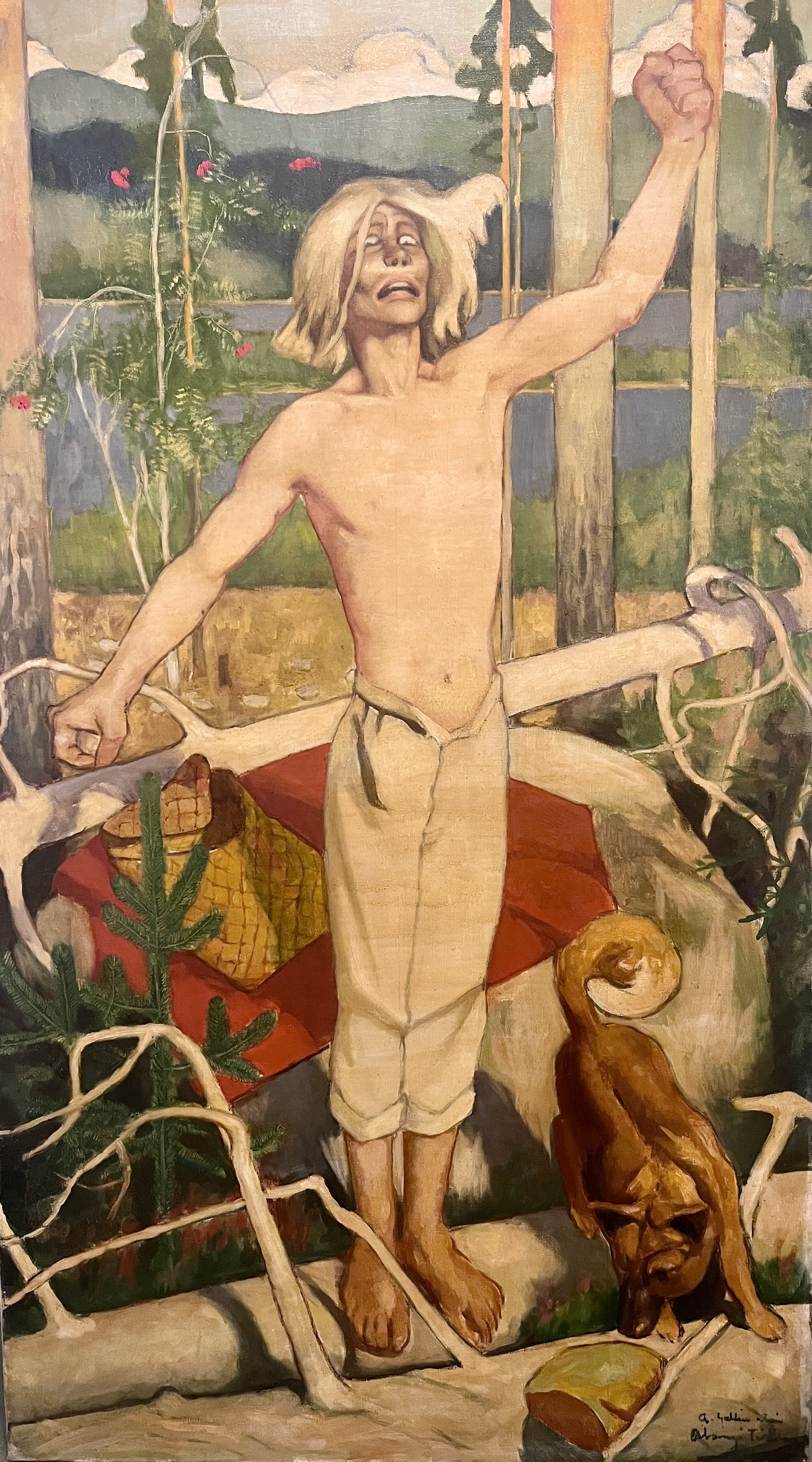
The painter, actor and theatre director Tivadar Abonyi was a versatile figure in twentieth-century Hungarian artistic life. As a painter, he was particularly known for his portraits, and in 1929 the Ernst Museum in Budapest devoted a major solo exhibition to his work. The present painting establishes a remarkable connection between Hungarian and Finnish art, drawing upon one of the best-known compositions by Akseli Gallen-Kallela (1865–1931), a leading representative of Finnish National Romanticism. The work also reflects Abonyi’s interest in the rich traditions of Nordic art and mythology.
The painting is based on Gallen-Kallela’s Kullervon kirous (Kullervo’s Curse), created in 1899, whose original is now housed in the Ateneum Art Museum in Helsinki, part of the Finnish National Gallery. The original composition depicts one of the most dramatic and expressive episodes from the Kalevala, Finland’s national epic.
Kullervo is among the most complex heroic figures in Finnish mythology. His story explores universal themes of human dignity, the pursuit of justice and resistance to fate. Forced into slavery during childhood, the young Kullervo works as a shepherd when his cruel mistress bakes a stone into his bread. As he attempts to cut it, the knife inherited from his father — the last remaining memento of his family — breaks against the hidden stone. At that moment, Kullervo’s grief and outrage erupt into a powerful expression of defiance: raising his clenched fist towards the heavens, he protests against the injustice he has suffered.
In Abonyi’s painting, the hero rises with an almost monumental presence against the backdrop of a northern forest. His uplifted arm, tense posture and impassioned facial expression convey the extraordinary emotional intensity of the moment. The slender tree trunks, lush vegetation, scattered pieces of bread and the dog at his side recall characteristic elements of the Finnish original. The contrast between the tranquillity of nature and the force of human emotion creates a particularly compelling dramatic tension.
The painting is therefore not merely a depiction of a scene from Nordic mythology, but also a timeless visual expression of human dignity, the longing for freedom and resistance to fate. Abonyi’s work represents a remarkable artistic connection between Hungarian painting and Finnish National Romanticism.