Olgyai, Viktor (1870 - 1929)
BiographyARTWORKS FOR SALE
WE ARE CURRENTLY SEEKING THE ARTIST’S WORKS FOR OUR UPCOMING AUCTIONS
The artist’s works are regularly featured in our auctions. For our upcoming auctions, we examine and evaluate suitable works based on photographs free of charge and without obligation. We then provide a recommendation for the most suitable sales method, whether by auction, consignment sale, or direct purchase for cash.
REQUEST CONSIGNMENT FOR THE NEXT AUCTION » | START FREE PHOTO-BASED VALUATION »
Biography
Biography
Viktor Olgyai was born in Igló (city in Slovakia) in 1870. He was the innovator of the modern etching technology. His teaching activities, professional humility and his helper will decisively contributed to many outstanding graphics had begun to deal with the graphic reproduction techniques.
He studied Arts Faculty of the University of Budapest, where he graduated in 1891, but he had never given up his picturesque aspirations. He visited Artúr Tölgyessy and Tihamér Margitay workshop as well. In the autumn, with the support of his brother he became a student at the Art Academy in Vienna. In a short time he got into the landscapist school of Edward von Lichtenfels (director of the institute in that time), where he worked next to Zoff, Ameseder and Wilt. At the same time he diligently attended the etchings school of William Unger.
As the teacher at the College of Fine Arts from the 1920s he managed to gather those young artists, who received attention and began addressing the engraving techniques in that time. For example Vilmos Aba-Novák, Károly Patkó, István Szőnyi or Jenő Barcsay learned this technique from him. As a teacher he had given free reins to his students, everyone followed their own style.
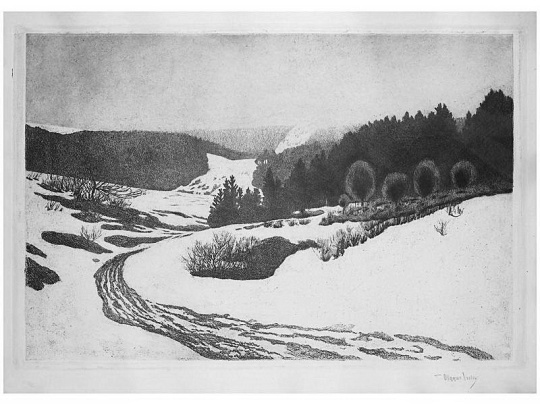
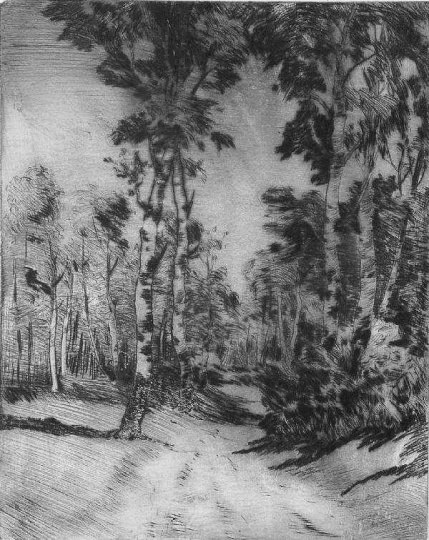
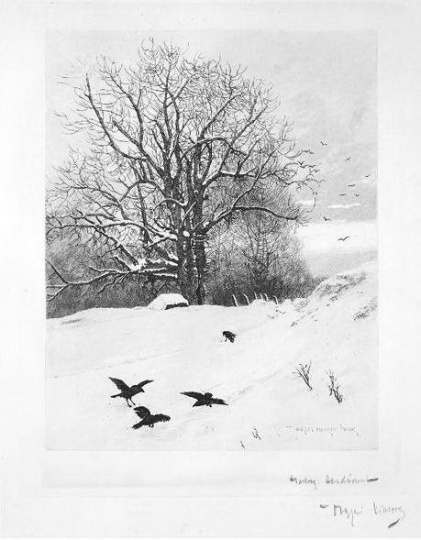
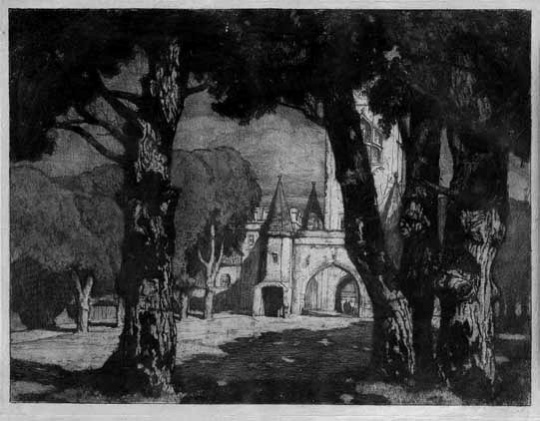
For his art style, the traditional mainly the picturesque solutions were specific, his landscapes almost painting-like works, he used the tools of realism. Such is the “Winter Album” etchings series, which released in 1897. On these well-crafted compositions the meticulously elaborate motifs were compensated by the large contiguous surfaces. On the pictures simultaneously felt the proximity of the nature and the contemplative, sometimes slightly melancholy mood.