COLLECTORS DISCOVERIES | Light and Faith | Stained-Glass Designs by József Viktorián Pituk
2026. September 24. - October 18.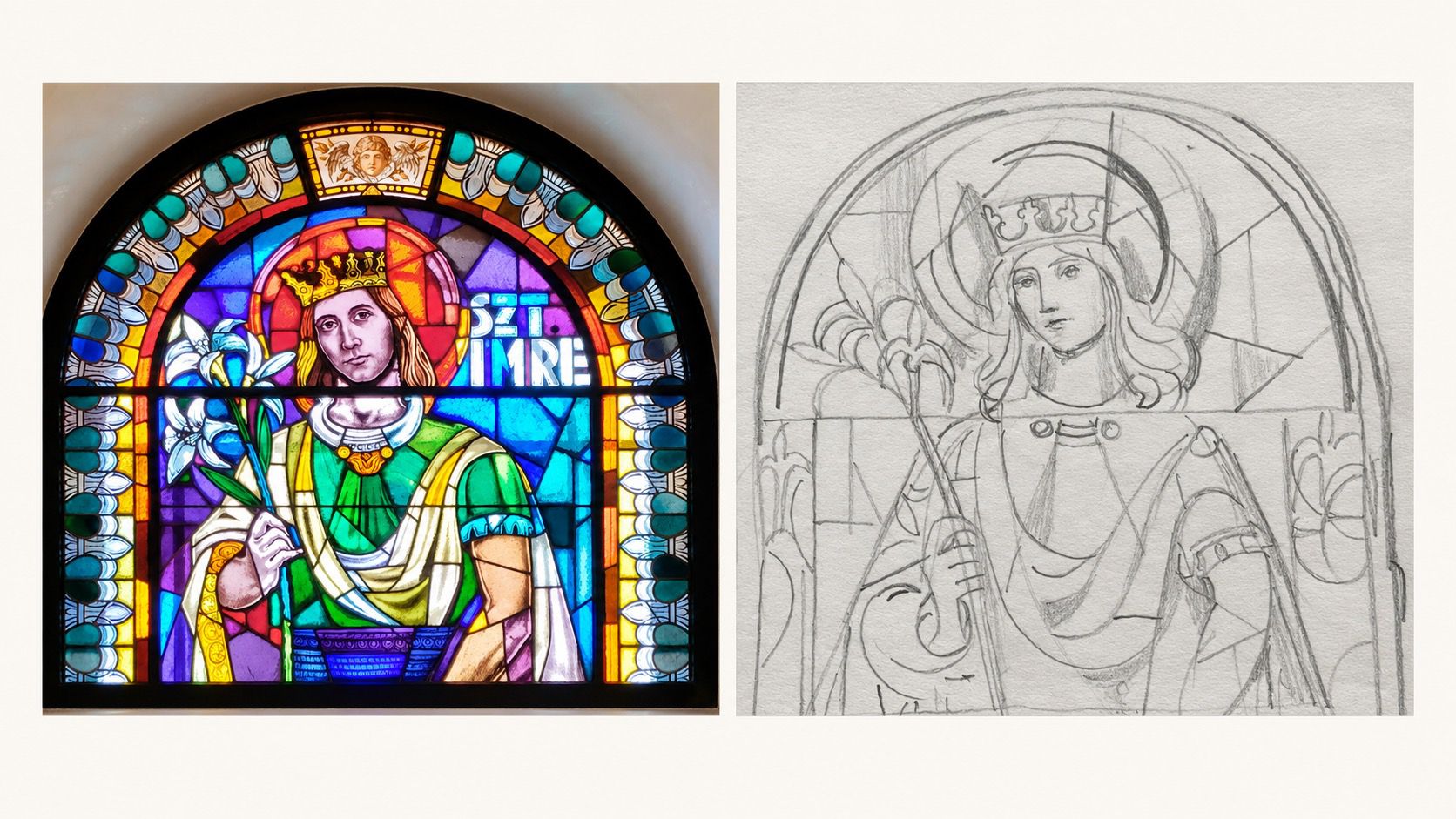
József Viktorián Pituk (1906–1991), an important figure as a painter, graphic artist, and stained-glass designer, was born in Selmecbánya (Banská Štiavnica). From 1928 to 1932 he studied at the Hungarian Academy of Fine Arts, where his teacher was Oszkár Glatz. Alongside his work in painting and graphic art, an especially significant—yet to this day relatively little-known—chapter of his oeuvre is represented by his monumental stained-glass windows and the designs created for them. One of the most important surviving masterpieces of his stained-glass work is the cycle of six windows depicting Hungarian saints, designed between 1978 and 1980 for the Chapel of the Holy Right in St Stephen’s Basilica, Budapest. The windows portray St Stephen, Blessed Gisela, St Emeric, St Ladislaus, St Elizabeth, and St Margaret. These works constitute one of the principal points of reference within Pituk’s monumental stained-glass oeuvre and clearly demonstrate the way in which he combined the figurative tradition, monumental composition, and the expressive power of light filtered through coloured glass.
In this medium, Pituk was one of the artists who carried forward the great tradition of twentieth-century Hungarian stained glass: his work forms a bridge between the turn-of-the-century legacy associated above all with Miksa Róth (1865–1944) and the modern monumental art that emerged after the Second World War. His ecclesiastical and secular commissions span several decades, from the windows created for the Central Seminary of Budapest in the 1940s to stained-glass compositions in Kaposvár, Besnyő, and Kecskéd. Between 1957 and 1960 he created five Eucharistic stained-glass windows depicting Christ for the sanctuary of the Church of Perpetual Adoration. For more than six decades, these were among the church’s defining artistic features before being dismantled in 2020. An important example of his secular, historically themed monumental stained glass is the 1960 composition “The Conquest of Buda Castle, 21 May 1849”, which remains in its original location in a public building in Buda Castle.
Organised to mark the 120th anniversary of the artist’s birth, our intimate exhibition, in which the works are also offered for sale, centres on a group of stained-glass designs from a private collection that have never previously been exhibited. Comprising approximately twelve smaller original works together with related documentary and illustrative material, the selection offers insight into Pituk’s creative process through pencil, watercolour, and gouache studies, tracing the development of his ideas from initial figurative concepts to meticulously worked-out compositions that already take the lead lines of the final stained-glass windows into account. Featuring rarely seen, often unique and unrealised designs, the exhibition presents a genuine rarity for connoisseurs and discerning collectors.
One of the most important works in the exhibition is the preparatory drawing for the stained-glass window depicting St Emeric in St Stephen’s Basilica, establishing a direct connection between the artist’s creative process preserved on paper and one of his best-known monumental works, which can still be seen in its original setting today. Of particular significance is also a stained-glass design made specifically for Székesfehérvár railway station. The monumental stained-glass window executed for the station in 1953 in collaboration with György Z. Gács represents an important example of the rarer secular dimension of Pituk’s work in the medium. The design presented here, which differs in several details from the final version, is therefore an especially valuable document of the composition’s development. Another highlight of the exhibition is an unrealised stained-glass design intended for the Parish Church of the Sacred Heart of Jesus in Városmajor in the second district of Budapest, preserving a rarely accessible chapter of Pituk’s monumental ecclesiastical artistic vision.
The selection is complemented by a self-portrait from Pituk’s youth, which provides a personal framework for the presentation of his monumental stained-glass designs and brings the artist himself closer to the visitor. Through these hitherto unknown works, the exhibition seeks to present József Viktorián Pituk not only as a painter and graphic artist, but also as a remarkable exponent of twentieth-century Hungarian figurative stained glass whose work deserves renewed attention and reassessment.
We would like to express our special thanks to István Tenkely, whose support and generous provision of the works made this exhibition possible.