Amerigo Tot Studio in Budapest: Research, Catalogue Raisonné & Art Valuation
The Koller Gallery is located in the former studio house of the Hungarian-Italian sculptor Amerigo Tot. In his honor, we have created a memorial space where visitors can view personal objects, sculptural tools, selected works, and historical documentation that contextualize his artistic legacy. Admission is free.
Do you own a work by Amerigo Tot? We provide professional support with authentication, art historical classification, and valuation — confidential and without obligation.
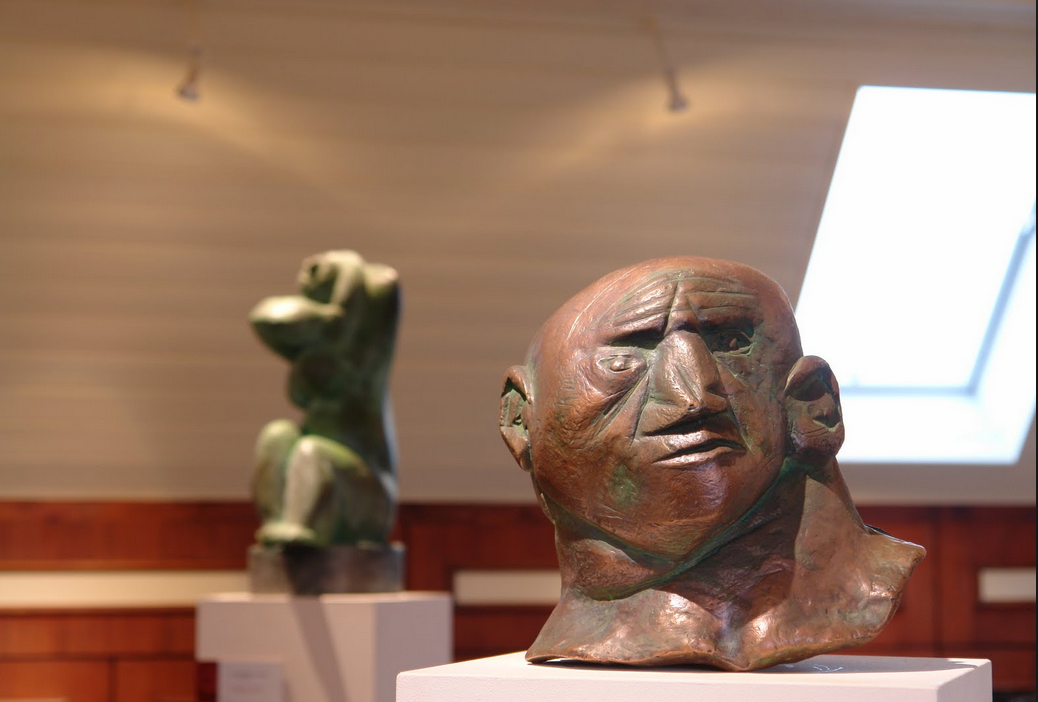
Amerigo tot
An adventourous live for Art
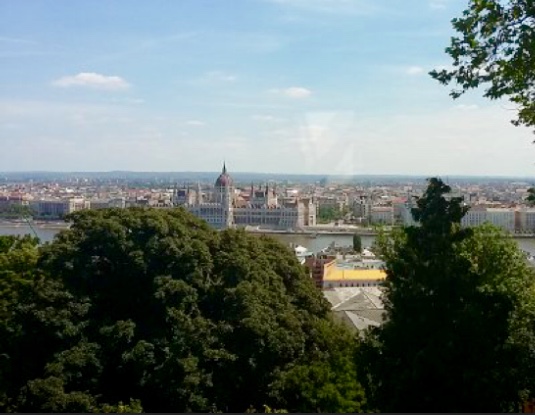
Tot 's Inspiration
View from the third floor of our Gallery
TOT IS THe GENIUS OF HUNGARIAN SCULPTIGUNG
Amerigo Tot, born as Imre Tóth (1909–1984), was a sculptor of Hungarian origin, born in Fehérvárcsurgó. Between 1926 and 1928, he studied in Budapest under Ferenc Helbing and György Leszkovszky. He was later admitted to the Bauhaus art school in Germany, where he studied under, among others, László Moholy-Nagy. In 1933, he escaped Nazi captivity and arrived in Rome on foot, where he spent the remainder of his life. A scholarship from the Hungarian Academy of Fine Arts in Rome supported the development of his sculptural work; later, he also served as an artistic advisor for the institution.
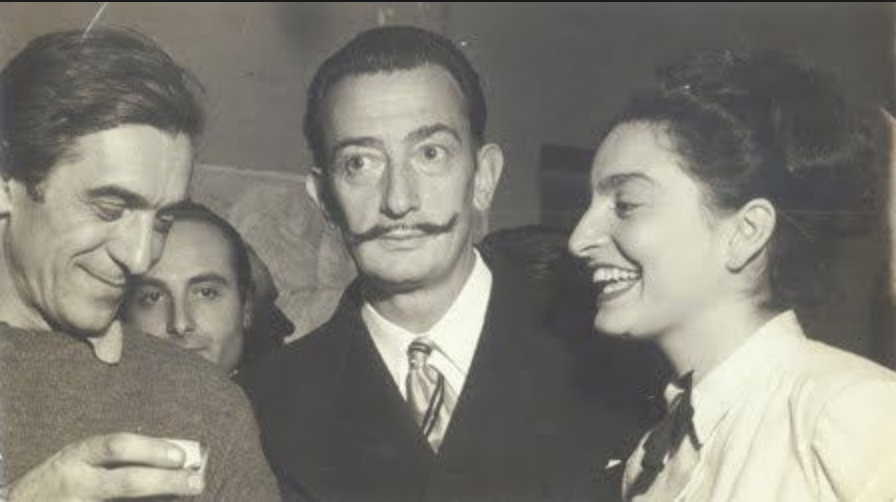
Tot AND salvador Dali
They met often in Rome, in Tot's studio at the via marguta.
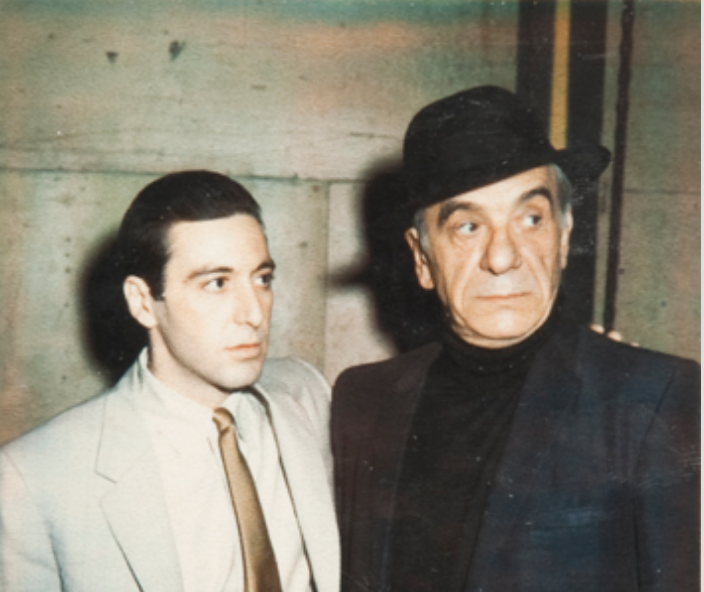
Tot and AL Pacino
He had also a role in Francis Ford Coppola"s "The godfather" as his bodyguard, so he met with the young Al Pacino
About His WOrks
His first major work to attract attention was the frieze on the façade of Rome’s Termini train station, which remains visible to this day. In 1969, he returned to Hungary, where he exhibited his sculptures in several major cities. Among his figurative works, the most famous is the “Madonna of Csurgó,” created for his hometown, Fehérvárcsurgó. In this piece, he sculpted the figures of his mother and himself. One version of this work is also on display in the memorial room.
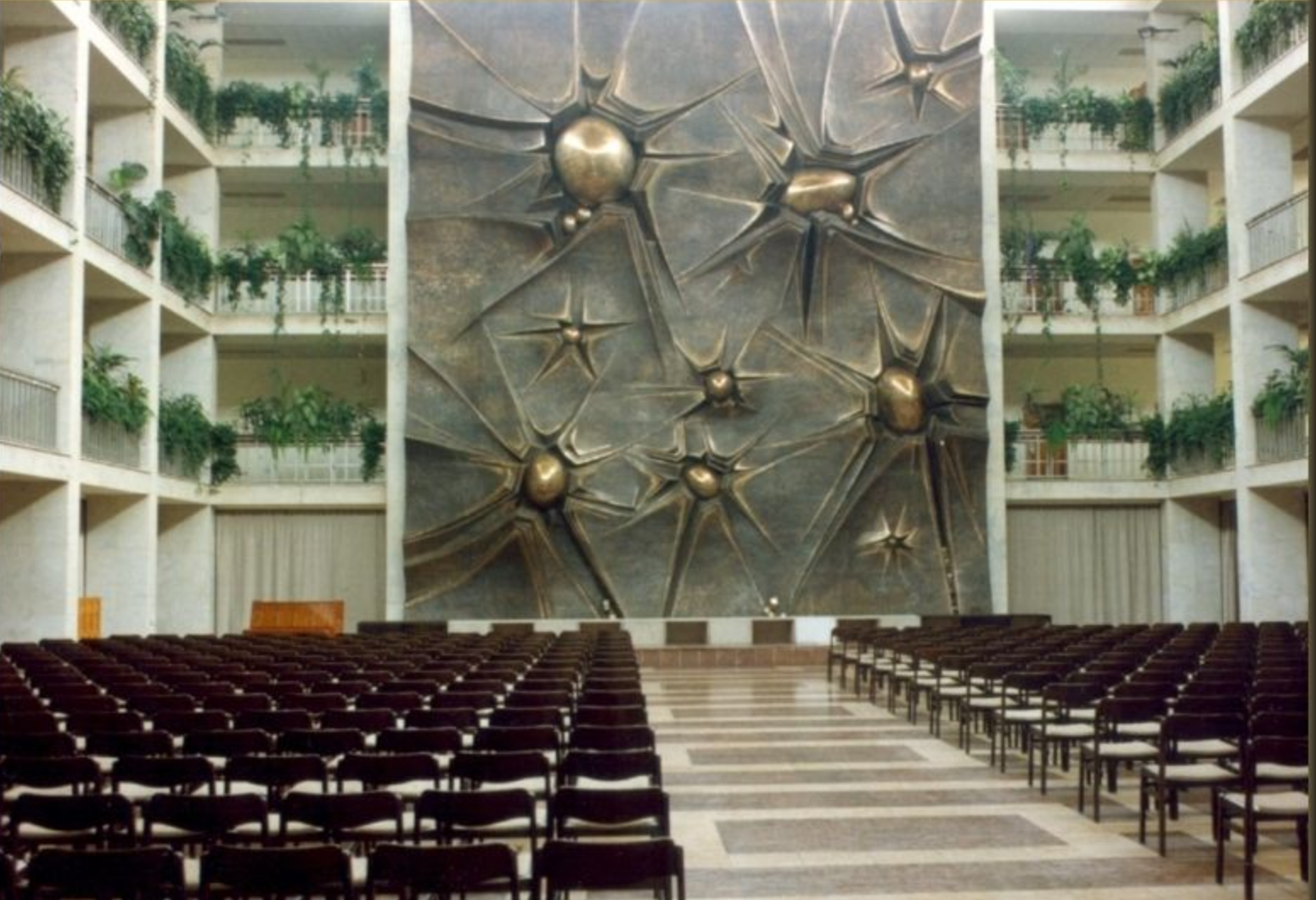
"THe apotheosis of the seED"
The world's largest relief sculpture to this day is the work of Amerigo Tot and is located in the ceremonial hall of the University of Agricultural Sciences in Gödöllő.
Amerigo Tot memorial room and research guide
The work of Hungarian-born sculptor Amerigo Tot (Imre Tóth, 1909–1984) belongs to the histories of both Hungary and Italy. Koller Gallery operates in the artist’s former home and studio building in Buda Castle. This page brings together information on visiting the memorial room, current research, sources and the examination of artworks. A detailed biography and selected exhibition history are available on Amerigo Tot’s artist page.
Amerigo Tot’s memorial room in Budapest
Koller Gallery established a permanent memorial room devoted to Amerigo Tot in his former studio building at Táncsics Mihály utca 5 in Buda Castle. Opened in 2010, the presentation brings visitors closer to the artist’s life and creative thinking through personal objects, documents and selected works. The gallery’s exhibition record documents the opening and the accompanying display of drawings.
Admission to the memorial room is free. Please check current visiting arrangements with the gallery; you can book an appointment here. We believe that the stories and documents associated with the works deserve preservation alongside the artworks themselves.
Current state of research
Exhibition catalogues, museum publications, contemporary press reports, library records, archival photographs and auction documentation offer evidence about Tot’s life and work. Reading these sources together gives a fuller picture than a short biography alone. Koller Gallery compares its exhibition and sales records with publicly accessible sources and welcomes additional information from private collections.
This guide is an evolving research summary. The evidence behind individual statements varies: institutional or contemporary records support some dates, independent sources make other details plausible, and several questions remain open. This page is not a completed catalogue raisonné or an inventory of every surviving work.
Two important points of reference are the Ludwig Museum’s 2009–10 exhibition Parallel Constructions, which considered Tot’s Hungarian reception and historical setting as well as his art, and the Janus Pannonius Museum’s 2020 account of the Pécs collection and local sculptural connections.
Main research topics and open questions
Training, names and chronology
Primary records could refine the account of Tot’s studies in the 1920s and 1930s, his time at the Bauhaus in Dessau, the Dresden exhibition and his arrival in Italy. Different accounts give 1920 or 1921 for the family’s move to Budapest and 1931 or 1932 for his first Dresden exhibition. Lists of teachers also differ over Gyula Kaesz and Károly Weichinger. We do not silently merge these divergent accounts.
Rome, relationships and the war years
The Via Margutta art scene, Angelo Zanelli’s role, the Collegium Hungaricum, Tot’s relationship with Eva Fischer and recollections of the Second World War are distinct subjects of inquiry. Personal memories, later interviews and contemporary documents need to be assessed according to their different evidentiary value.
Materials, variants and architectural commissions
Tot worked in drawing, printmaking, ceramics, bronze, concrete and aluminium. A sketch, plaster model, cast and version installed in a building are different objects. Repeated motifs and monumental commissions make it particularly important to establish the relationship between designs, executed works and later variants.
Reception in Hungary and abroad
The Hungarian exhibitions of 1969, the permanent presentation opened in Pécs in 1978, the Budapest exhibition of 1982 and later reassessments presented Tot’s work in different historical circumstances. Research should examine exhibition checklists, criticism, institutional records and the location of works at the time together.
Archival photographs and historical comparison
Archival photographs document studios, exhibitions, public spaces, people and sometimes works of art. Public Fortepan records include, for example, a photograph connected with Tot’s 1969 exhibition at the Műcsarnok, documentation of the Tihany opening and a 1980 photograph of the garden of the Táncsics Mihály utca studio building. According to its caption, a 1972 photograph depicts the work Komarov emlékére.
The caption, the dating of the photograph and the identification of a visible work are separate checks. A shared motif does not automatically establish that an object today is the same cast or example visible in an old photograph. We therefore use photographs as historical evidence and record the grounds for any proposed match.
How do we examine a work attributed to Amerigo Tot?
1. Object description: we record medium, material, dimensions, inscriptions, signatures, numbering and condition. For sculpture, the base, casting features and patina also need documentation.
2. Distinguishing variants: we compare title, form, dimensions and material with other published examples. A similar title or composition alone does not establish that two objects are identical.
3. Provenance and documents: we consider known ownership history, invoices, letters, exhibition labels, catalogues and archival photographs. Each detail is recorded with its source and date.
4. Conclusion: we distinguish confirmed findings, plausible interpretations and matters still requiring verification. Online research is a starting point; assessing authenticity, the precise variant and condition may require examination of the object itself.
Amerigo Tot: research bibliography
The books and exhibition catalogues identified online below provide starting points for research. This is not an exhaustive bibliography of journal articles or press reports. Missing publication details and conflicting records require checks against library holdings or physical copies.
1950. Emilio Villa: Sculture e disegni di Tot. Rome: La palma, [3] + 43 pages. Library record.
1954. Emilio Villa: Tot. Rome: La palma, 41 + [16] pages and 32 plates. Library record.
1969. Tot I Tihany I 69. Kulturális Kapcsolatok Intézete, 60 pages.
1976. Amerigo Tot. Publisher not yet identified, 136 pages.
1978. Tot. Carte Segrete, 142 pages.
1979. Amerigo Tot szobrai: Modern Magyar Képtár, Pécs. Text and editing by Tamás Aknai. Pécs: Janus Pannonius Múzeum, 28 pages. Regional bibliography.
1982. Amerigo Tot szobrászművész kiállítása a Magyar Népköztársaság Művészeti Alapjának kiállítótermében. Edited by Zsuzsa D. Fehér. Budapest: Vigadó Galéria, [16] pages. National library record.
1982. Éva Hárs: Modern művészet a pécsi múzeumokban. 1. Önálló gyűjtemények: Amerigo Tot szobrai, Csontváry Múzeum, Martyn-gyűjtemény, Uitz Múzeum, Vasarely Múzeum. Budapest: Képzőművészeti Kiadó, 30 pages. Regional bibliography.
1983. Tot – Amerigo Tot. Idegenforgalmi Vállalat, 174 pages.
2007. Mappák Rómából, exhibition catalogue. Publisher details and extent to be checked. Institutional exhibition page.
2009. Amerigo Tot, 210-page publication. Publisher details to be checked; we do not automatically identify it with the following 117-page catalogue.
2009. Amerigo Tot. Párhuzamos konstrukciók. Edited by Emese Kürti and József Mélyi. Budapest: Ludwig Múzeum, 117 pages; ISBN 978-963-9537-22-4. Publisher’s record.
2012. Siesta. Institutional publication, 40 pages.
2014. Amerigo Tot – Questing in Italy. Institutional publication, 268 pages.
2019. Amerigo. Budapest: Európa Kiadó, 360 pages.
Bibliographic discrepancies: an earlier online list describes the 1954 Tot as 100 pages, whereas a museum library records 41 + [16] pages and 32 plates. For the Pécs catalogue Amerigo Tot szobrai, a regional bibliography gives [1979] and Tamás Aknai; another online account gives a different year and name. The imprint of a physical copy may resolve these questions.
Contribute to the research: contact and valuation
We welcome information on Tot’s works in private collections, past exhibitions, letters, catalogues, photographs and other historical documents. Photographs of the entire object, details, reverse or base, together with dimensions, material and known ownership history, can be particularly helpful. We agree on any public use of submitted material separately; an enquiry alone is not permission to publish it.
Do you own a sculpture, drawing, print or other work by Amerigo Tot? Koller Gallery can assist with a preliminary valuation, auction or consignment sale and, where appropriate, a direct purchase. Request a free preliminary valuation here. Research documentation, examination of authenticity and commercial valuation are distinct questions; none follows automatically from receiving a photograph.
Documented world auction record
At the gallery’s auction on 1 December 2024, Tot’s bronze sculpture Utolsó vacsora után (After the Last Supper) sold for a hammer price of HUF 2,800,000. According to Artprice auction data and the gallery’s documentation, this is a world auction record for Amerigo Tot’s bronze sculptures. The record concerns a documented result in this category; it is not a general guide price for other works by Tot. The lot record and hammer price and the gallery’s report on the record are available online.